Service

Educational systems

SmartLab is a modular educational platform for modern technical training. Hardware, measurements, the GUI application and ready-made exercise guides form one system rather than a set of separately purchased devices.

  • SmartLab
  • power electronics
  • electric drives
  • automation

Buying equipment is only the beginning

A modern teaching lab is more than a hardware purchase. The instructor still has to combine equipment, safety, measurements and a lesson plan — every single time. A device does not say what a student should learn or how, and several laboratory groups need the same benches, procedures and materials.

Hardware, measurement and syllabus in one system

  1. The benchSafe hardware, protective covers and a full accessory set.
  2. Measurement and GUIControl, acquisition and analysis in a single application.
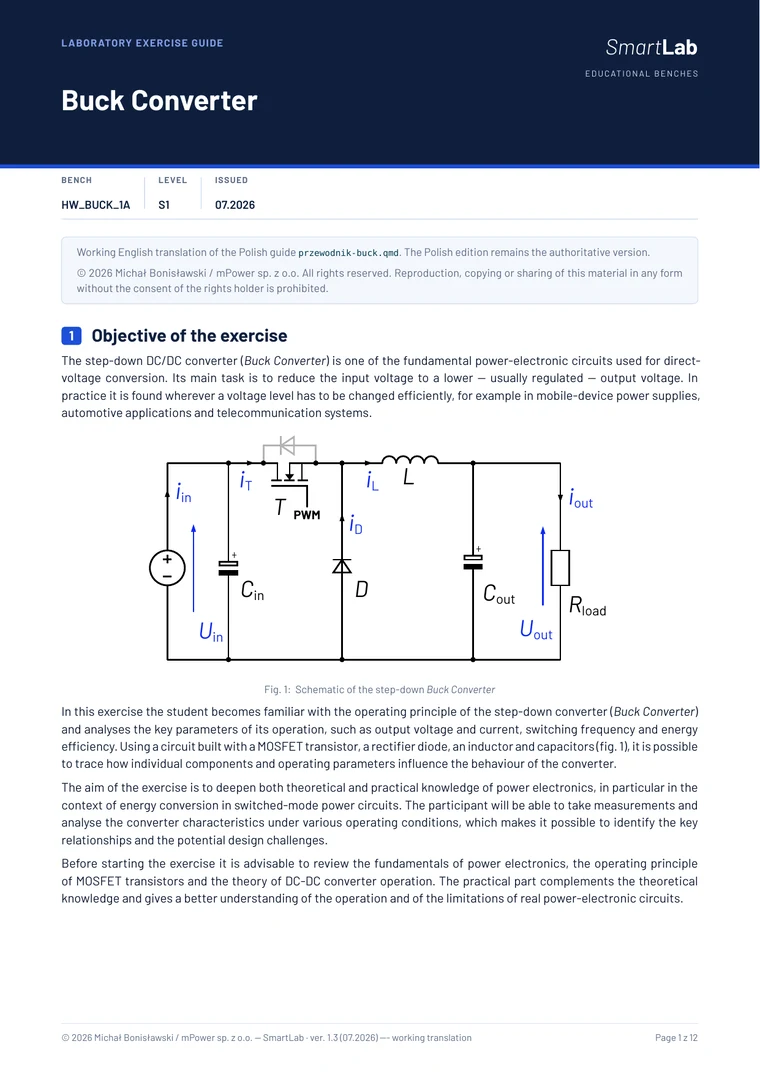
  3. The exerciseTheory, measurement procedure and interpretation of results.
  4. GrowthFurther modules built on the shared measurement-control base.

Students work on their own, and safely

The bench is designed so that an exercise can run without the instructor assisting at every step. The protections work regardless of what the student sets in the application.

  • Low supply voltage of 12–24 V
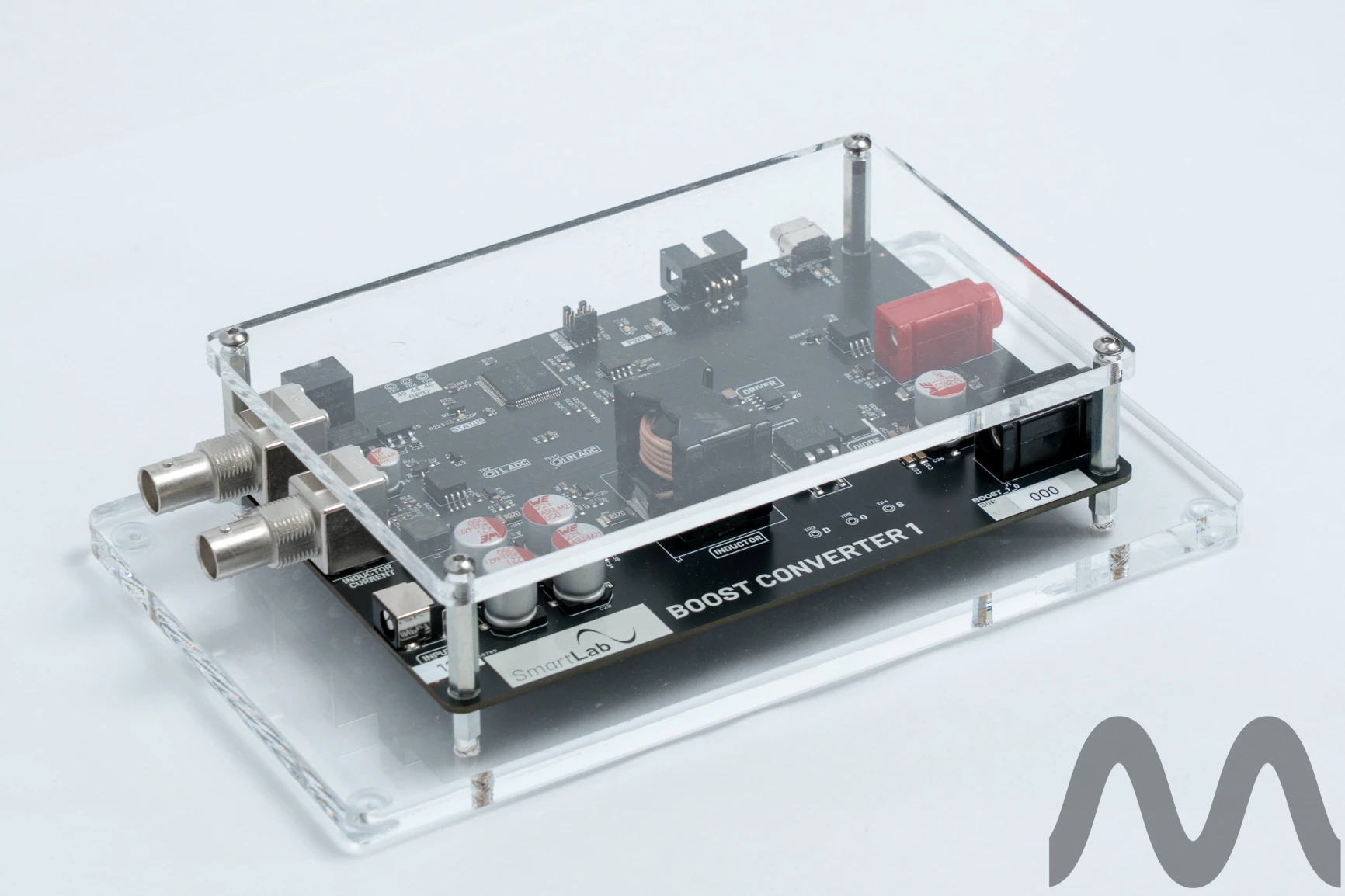
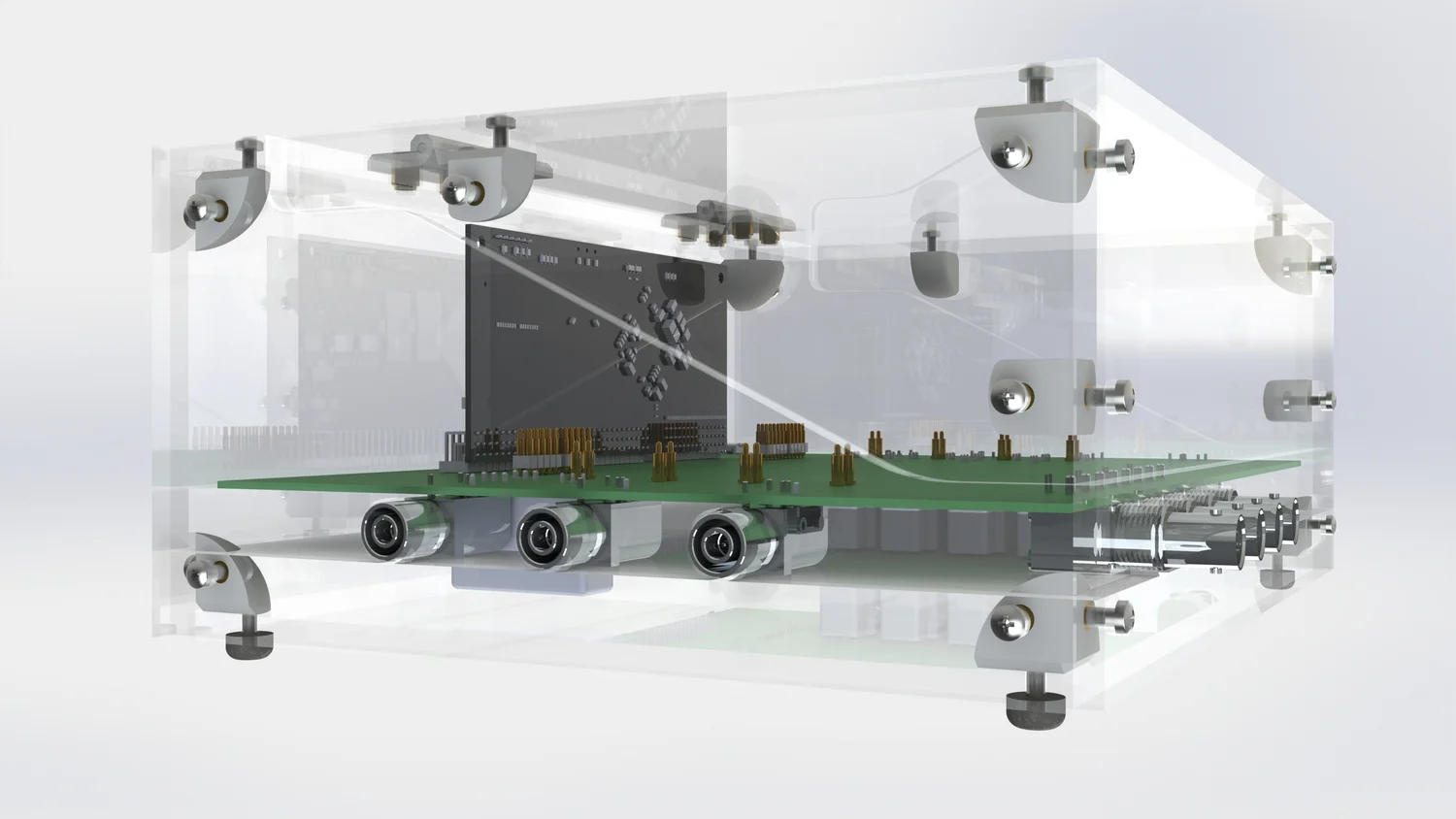
  • Transparent covers — the circuit stays visible but out of reach during operation
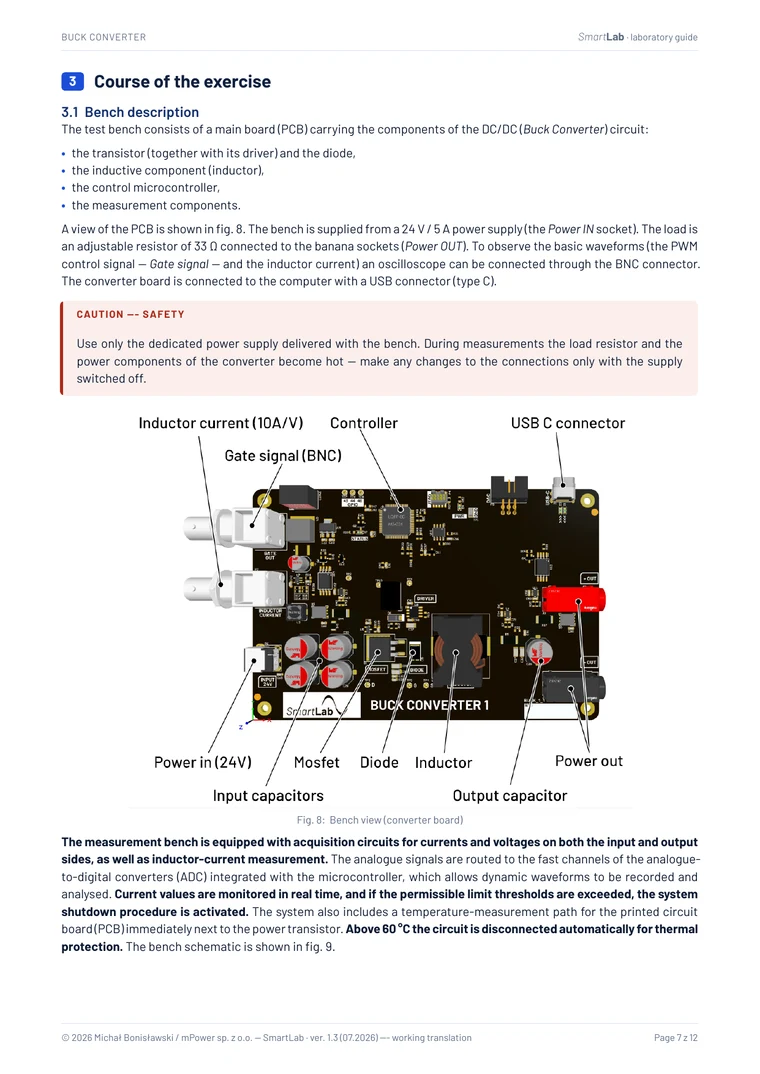
  • Currents and voltages monitored in real time; exceeding a threshold shuts the bench down
  • A temperature sensor next to the power transistor disconnects the circuit above 60 °C
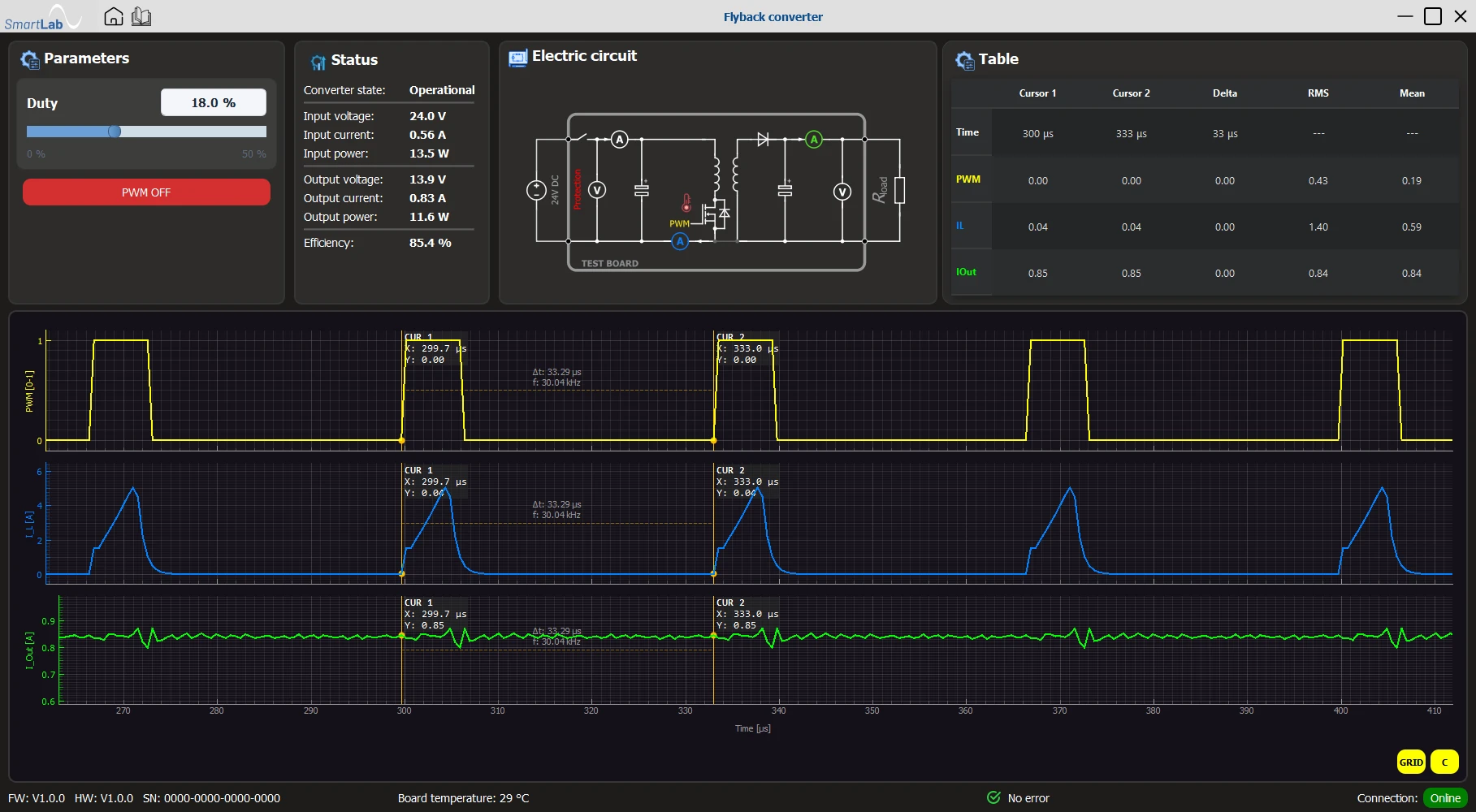
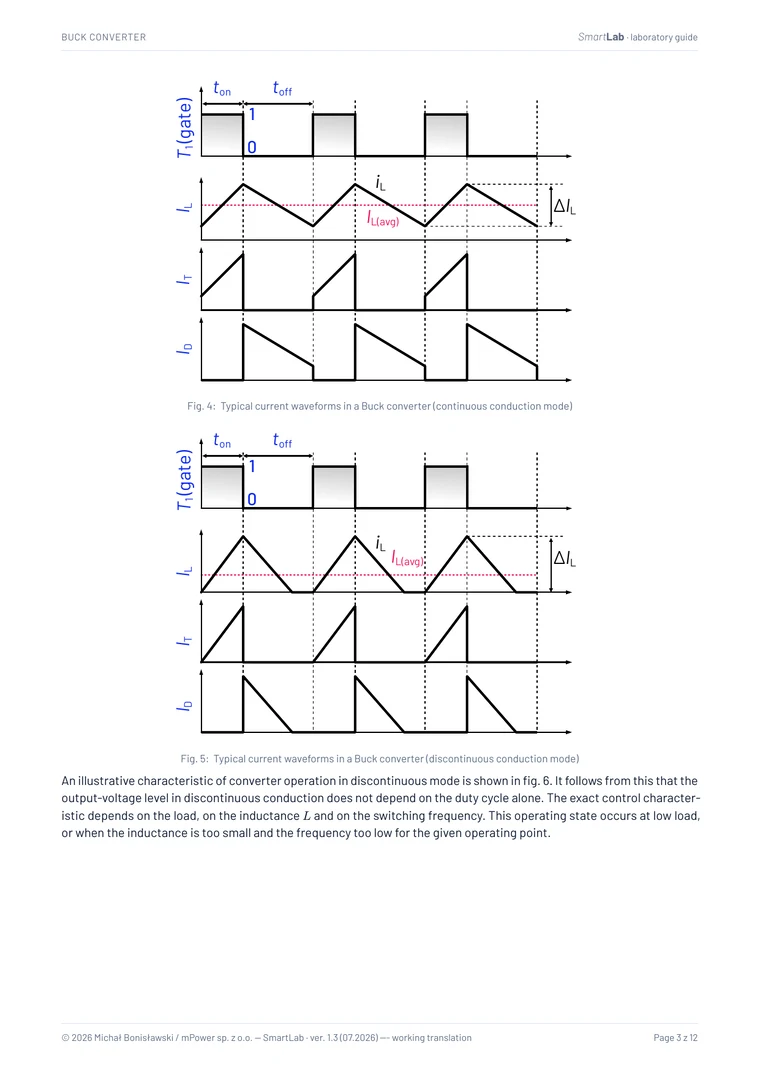
  • Measurement and waveform recording without additional instruments

One exercise from start-up to interpretation

  1. RecognitionThe student identifies the topology and prepares the bench.
  2. Start-upOperating parameters are set from the GUI application.
  3. MeasurementVoltages, currents and dynamic waveforms are recorded.
  4. ConclusionsResults are compared with the model and theoretical relationships.

A guide for every exercise

  1. ObjectiveWhy the student runs the circuit and what they will learn.
  2. TheoryOperating principle, equations, key components and control.
  3. ProcedureBench description and successive measurements with result tables.
  4. ReportAssessment requirements and further reading.

Guides are authored in Polish. The English edition shown here is a working translation.

Available · deployed

Power electronics — fundamentals

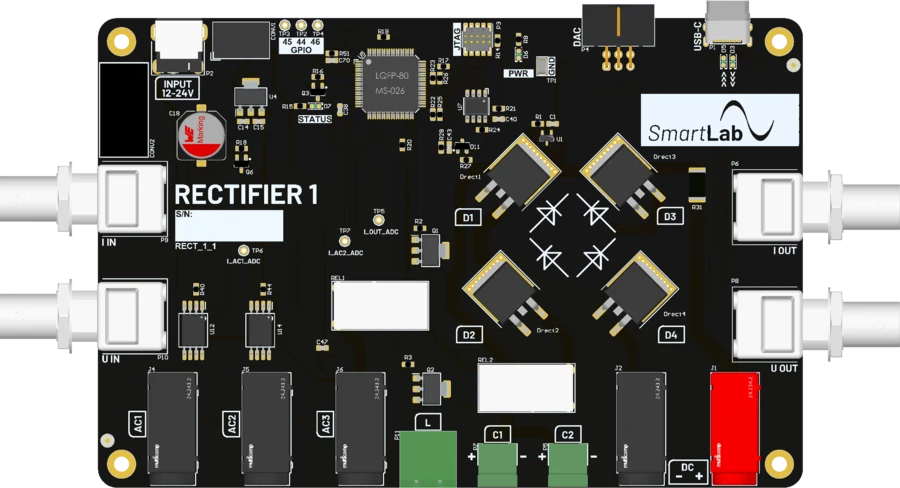
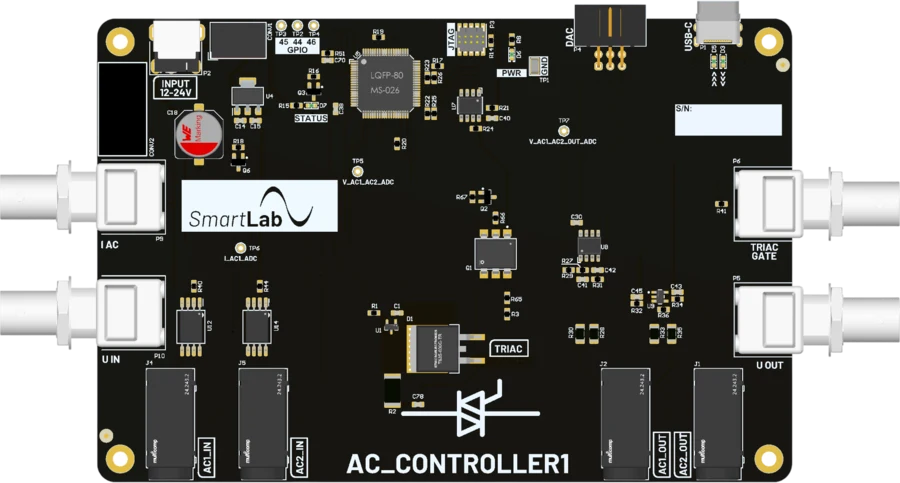
  • Rectifier (AC/DC) and AC phase controller
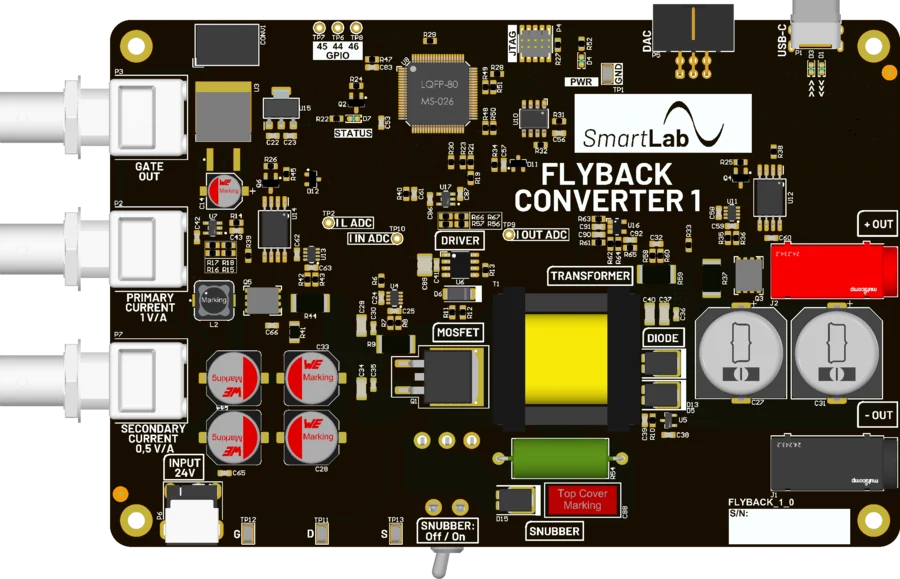
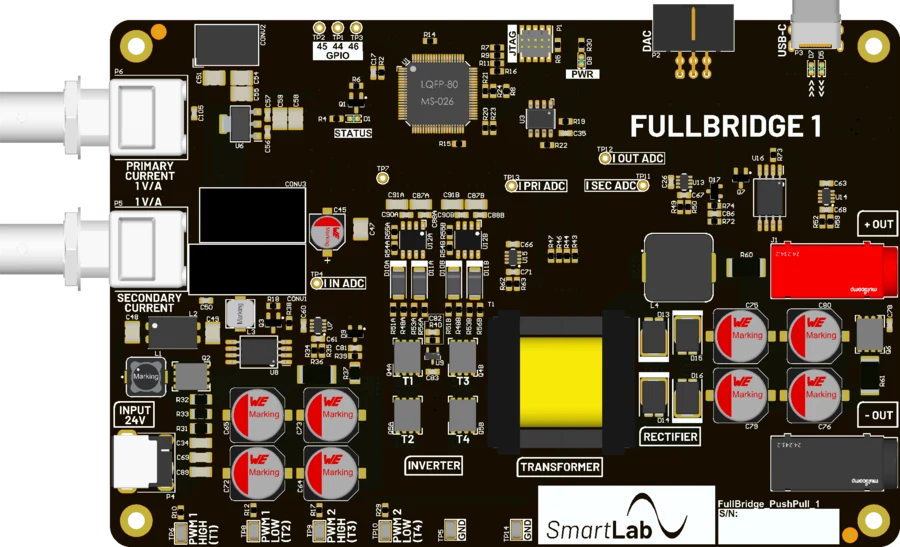
  • Buck, Boost, Flyback, Push-Pull (DC/DC)
  • Single-phase inverter (DC/AC)
  • Static and dynamic measurements
  • DSP control and waveform acquisition

Course levels and lab organisation

  • Levels: technician, bachelor-level and master-level courses
  • Demonstrations, laboratory classes, project work and independent measurements
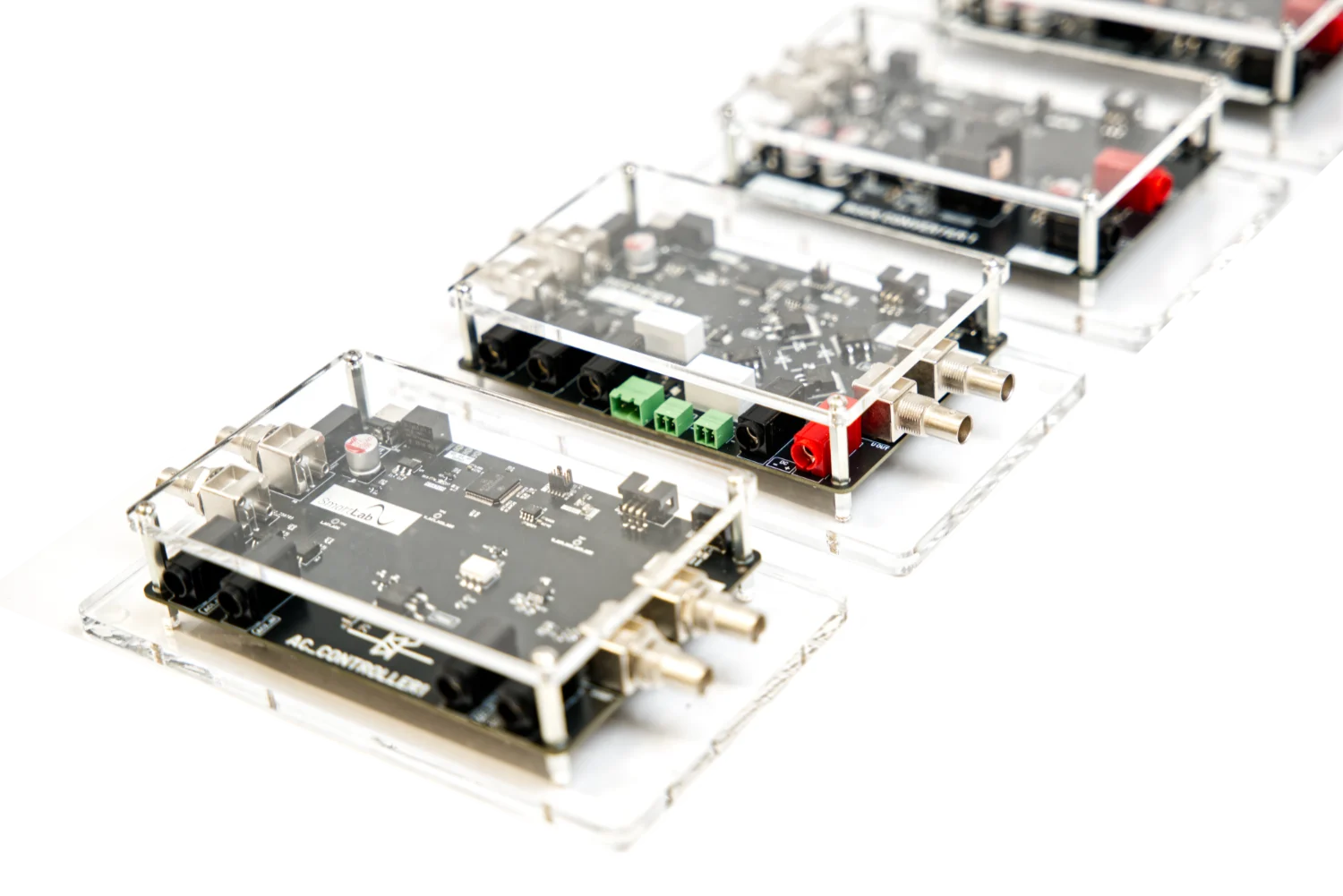
  • Several groups working in parallel on identical benches
  • A physical oscilloscope or the virtual one built into the GUI

Deployment: power electronics laboratory at ZUT

4groups working in parallel
8exercises in the programme
32exercise boards
40guides in print and PDF

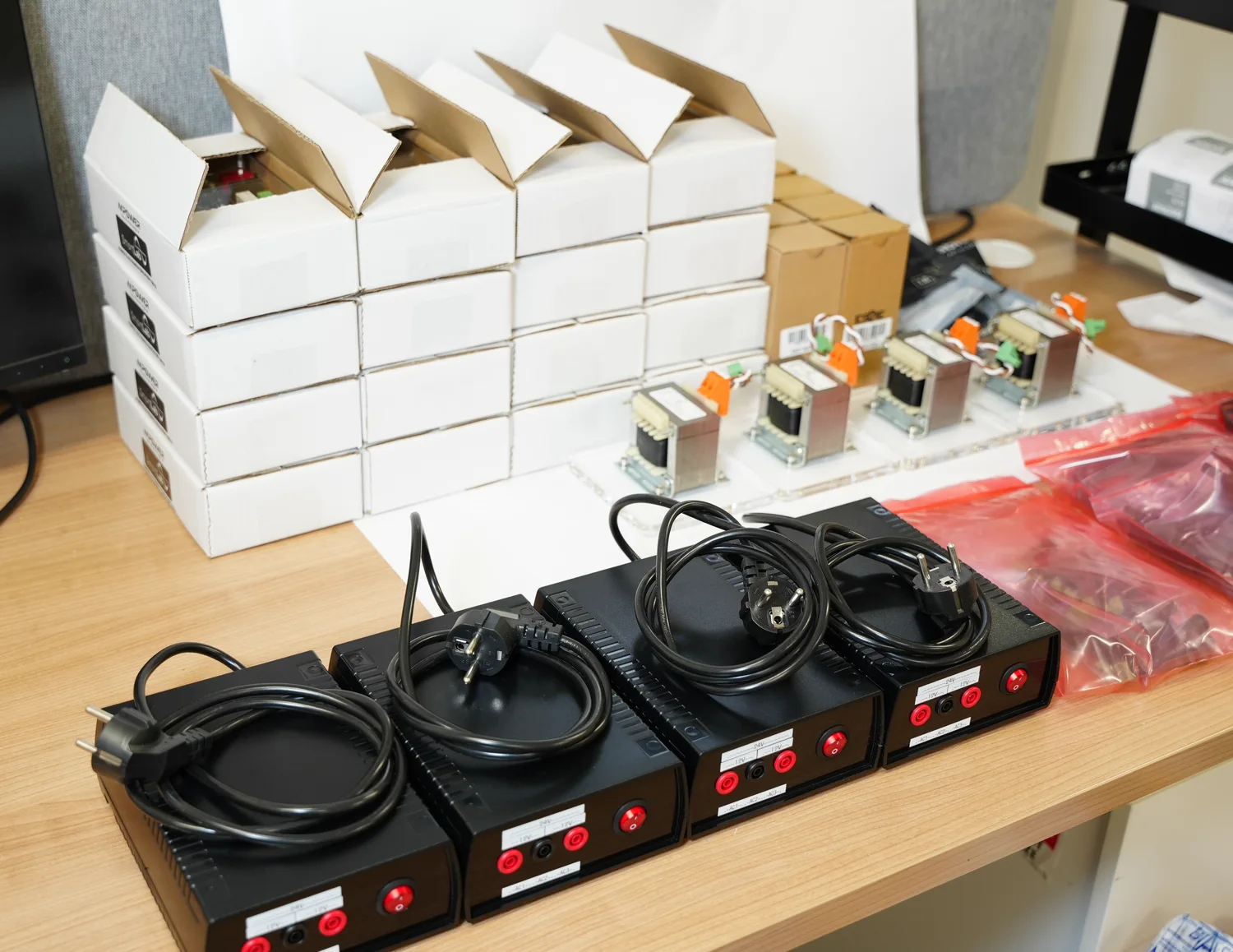
The delivery also included four accessory sets: sliding resistors, DC and AC power supplies, banana and USB cables, and passive L and C components.

SmartLab delivery prepared for the West Pomeranian University of Technology
Delivery prepared for the West Pomeranian University of Technology.
Available

Power electronics

A complete set of benches, exercises and materials. Deployed at a customer site.

In development

Power electronics V2

One measurement-control base with interchangeable DUT boards. Planned for higher voltages and LLC, DAB and PSFB topologies.

In development

Drives and automation

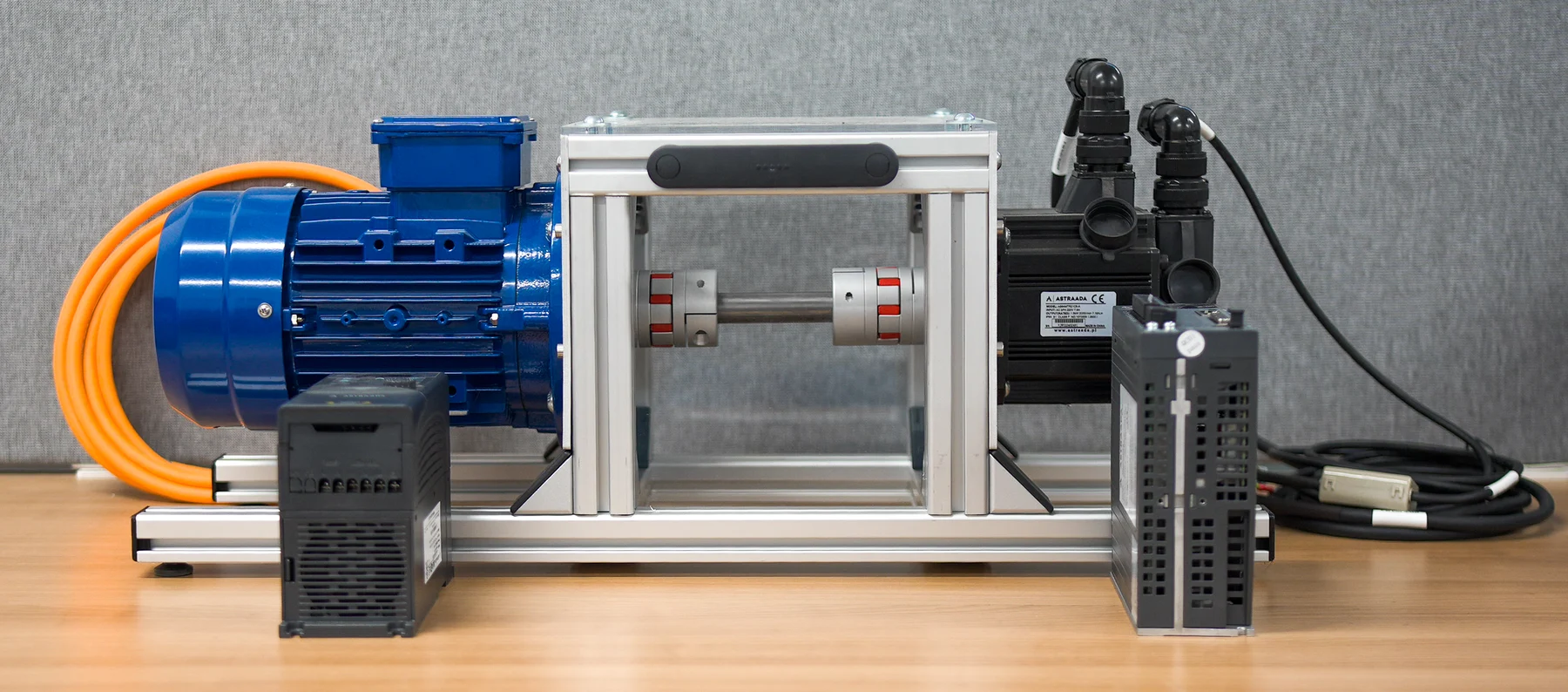
Control of DC, induction and PMSM motors, position sensors and a 2 kW research bench.

Concept

Smart grid

Renewable sources, generation simulators, energy storage and power quality.

Custom build

Hydrogen technologies

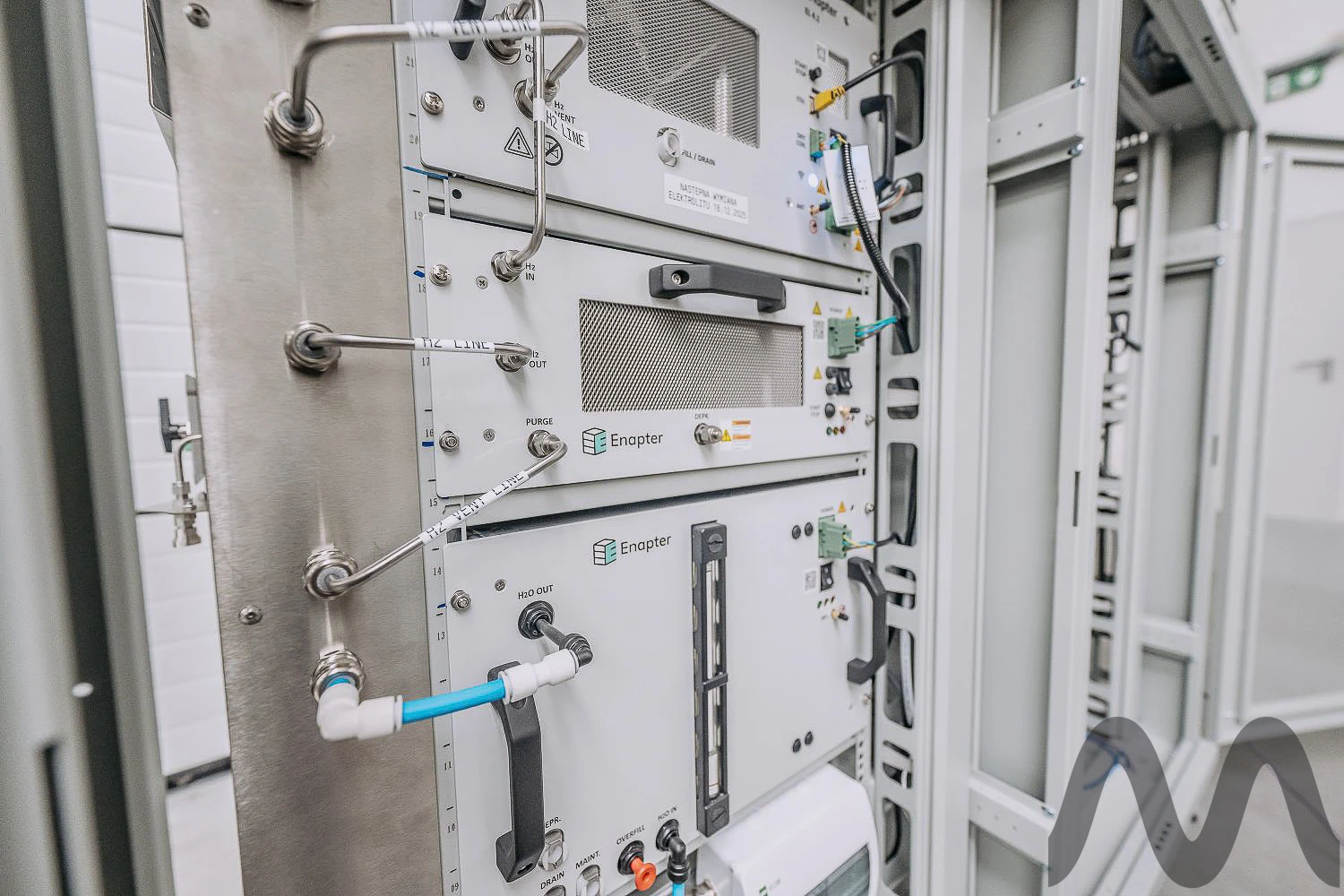
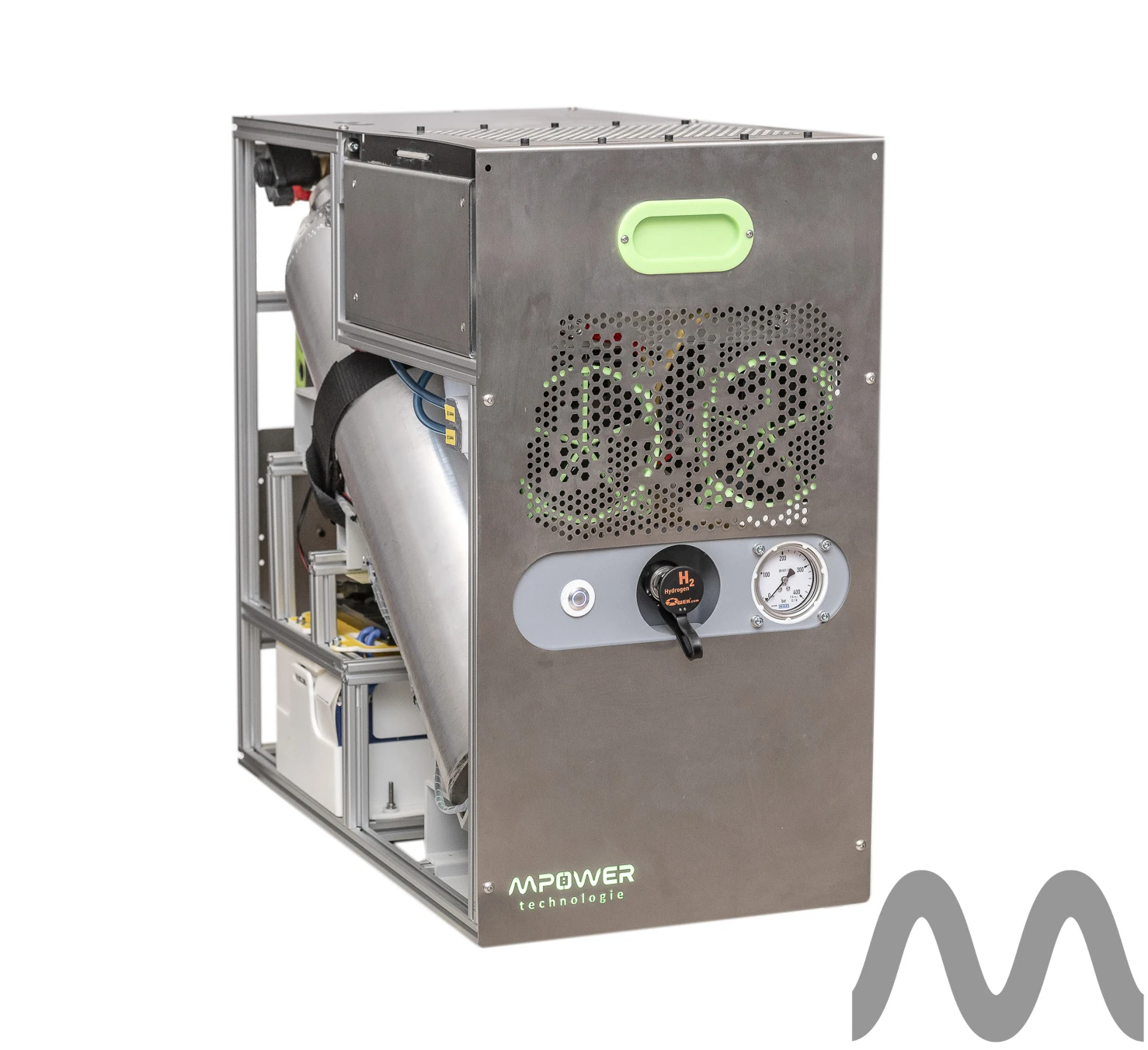
Electrolyser, hydrogen storage, fuel cell and the energy balance of the whole system. Delivered as individual projects.

Delivered · custom build

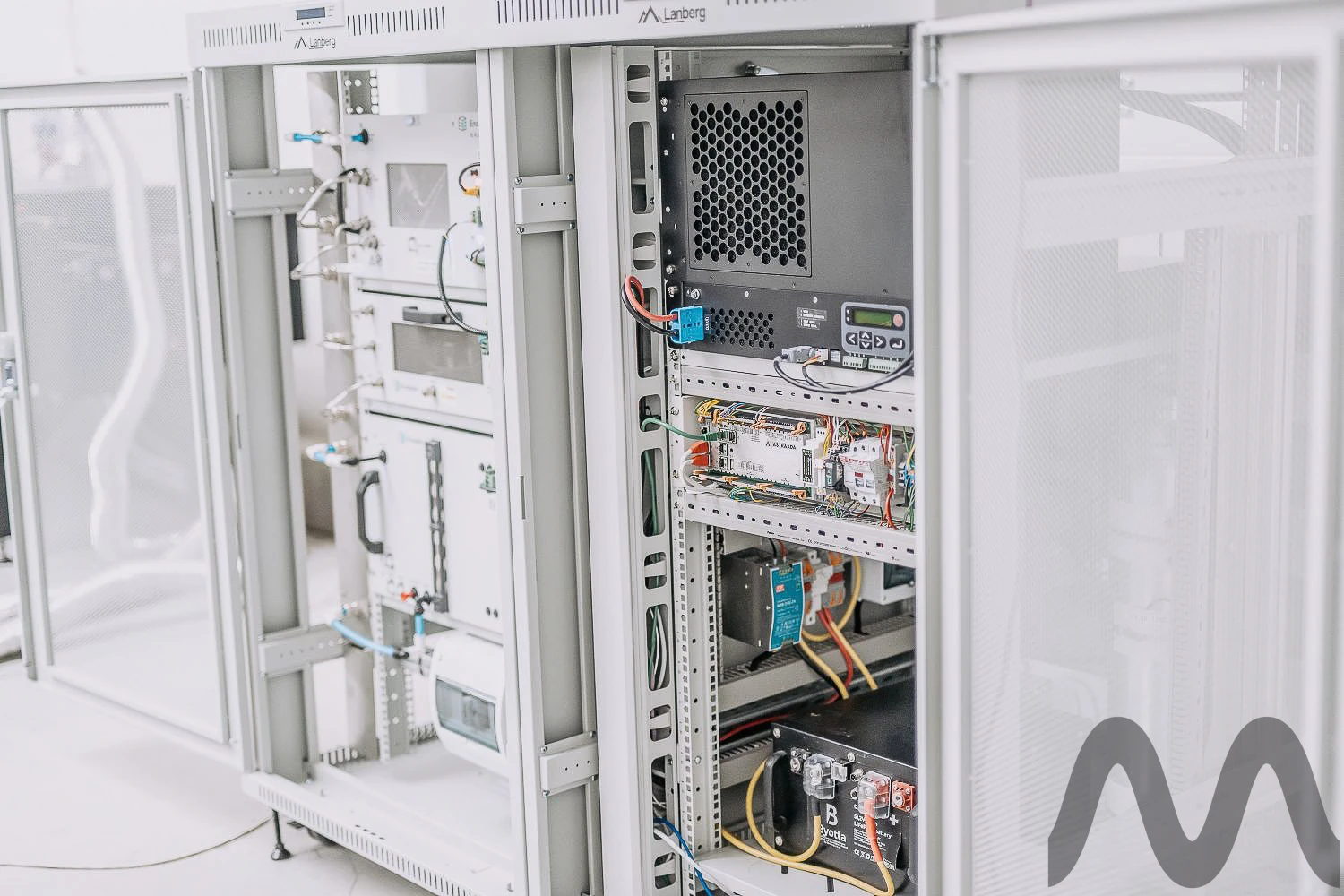
An example delivery: a teaching bench for generating hydrogen by membrane electrolysis and using it as fuel in a fuel cell, built for the mechatronics and electrical engineering faculty of a technical university. Students run the full cycle on it: hydrogen production, pressurised storage and energy recovery, with the balance measured at every stage.

2 kWAEM hydrogen generator
30 barhydrogen outlet pressure
10 lbuffer vessel, 100 bar
1 kWPEM fuel-cell module

Plus reverse-osmosis water treatment, a dryer raising hydrogen purity to 99.999 %, two-stage pressure reduction, a PLC with a graphical interface and a hydrogen leak detection system. This is not a catalogue item — every installation is assembled for a specific customer. The delivery includes the software and on-site training of the customer's staff.

Industrial practice

Exercises are based on topics known from real applications: component selection, voltage and current measurement, working with a DSP controller, safe bench operation, diagnostics and documenting results.

Let us start from your syllabus

We will match the platforms, the number of benches, the exercise level and the required accessories to the learning outcomes you want to achieve. kontakt@mpowertech.com.pl